Guides
Everything you need to keep it alive
Six years of helping every type of customer, and plenty of our own experience along the way. Short, honest guides. No filler.
 Setting it upWheels on, soil in, grass in. Five minutes, no tools - with a 15-second video of the whole thing.Read this
 The one that matters mostLooking after your grassWhy it dies early, the five mistakes we see most, and how to get months instead of weeks.Read this
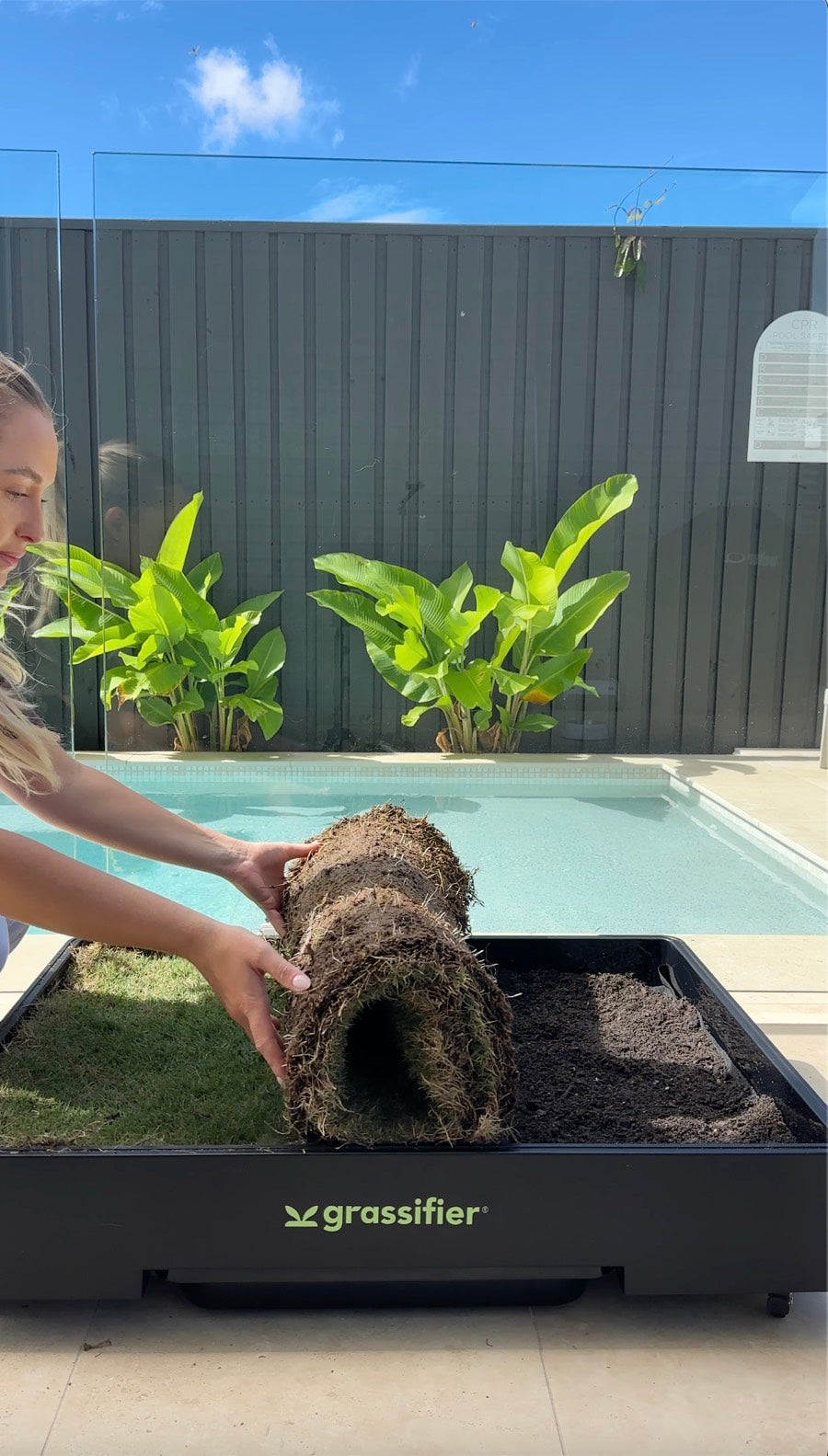
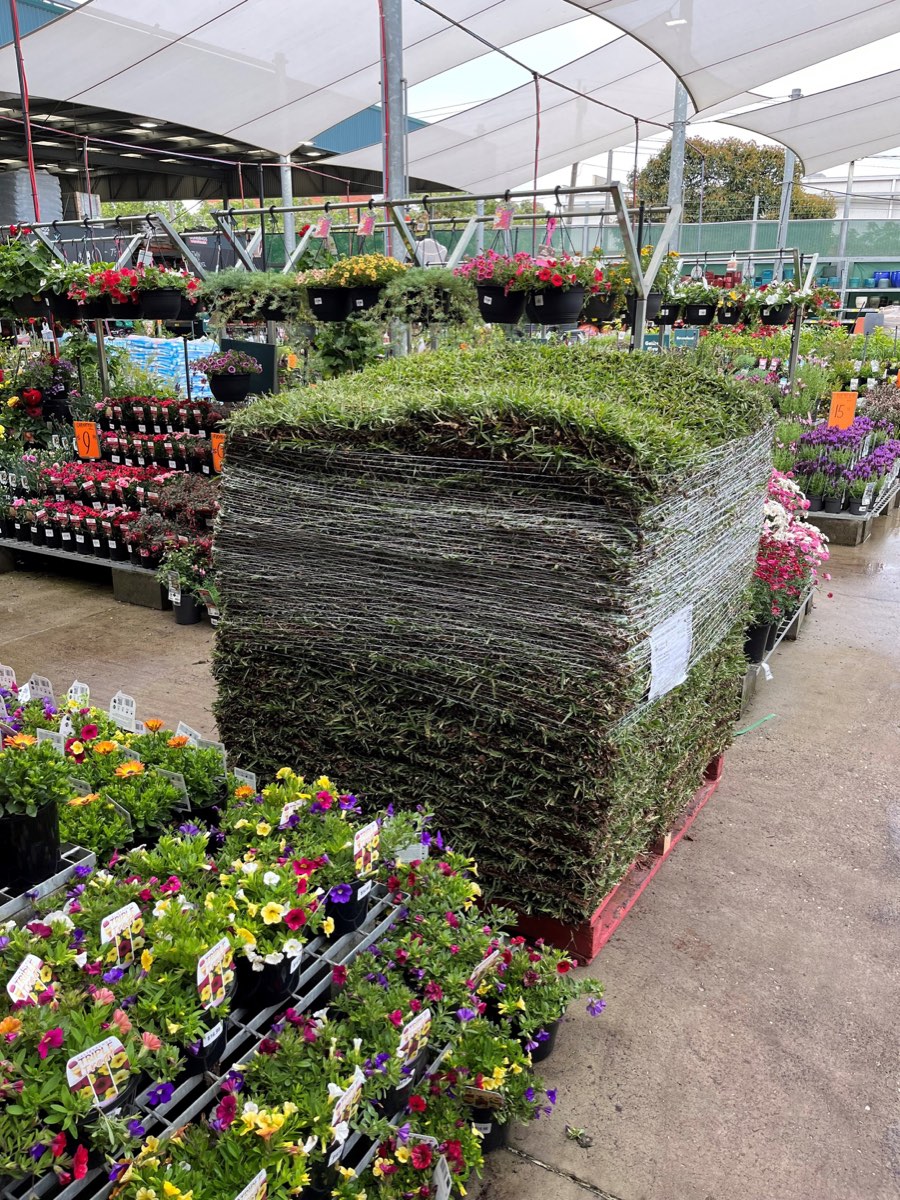 VideoChanging your grass in 10 minutesOld grass out, fresh grass in. The whole change, start to finish, in one short video.Watch it
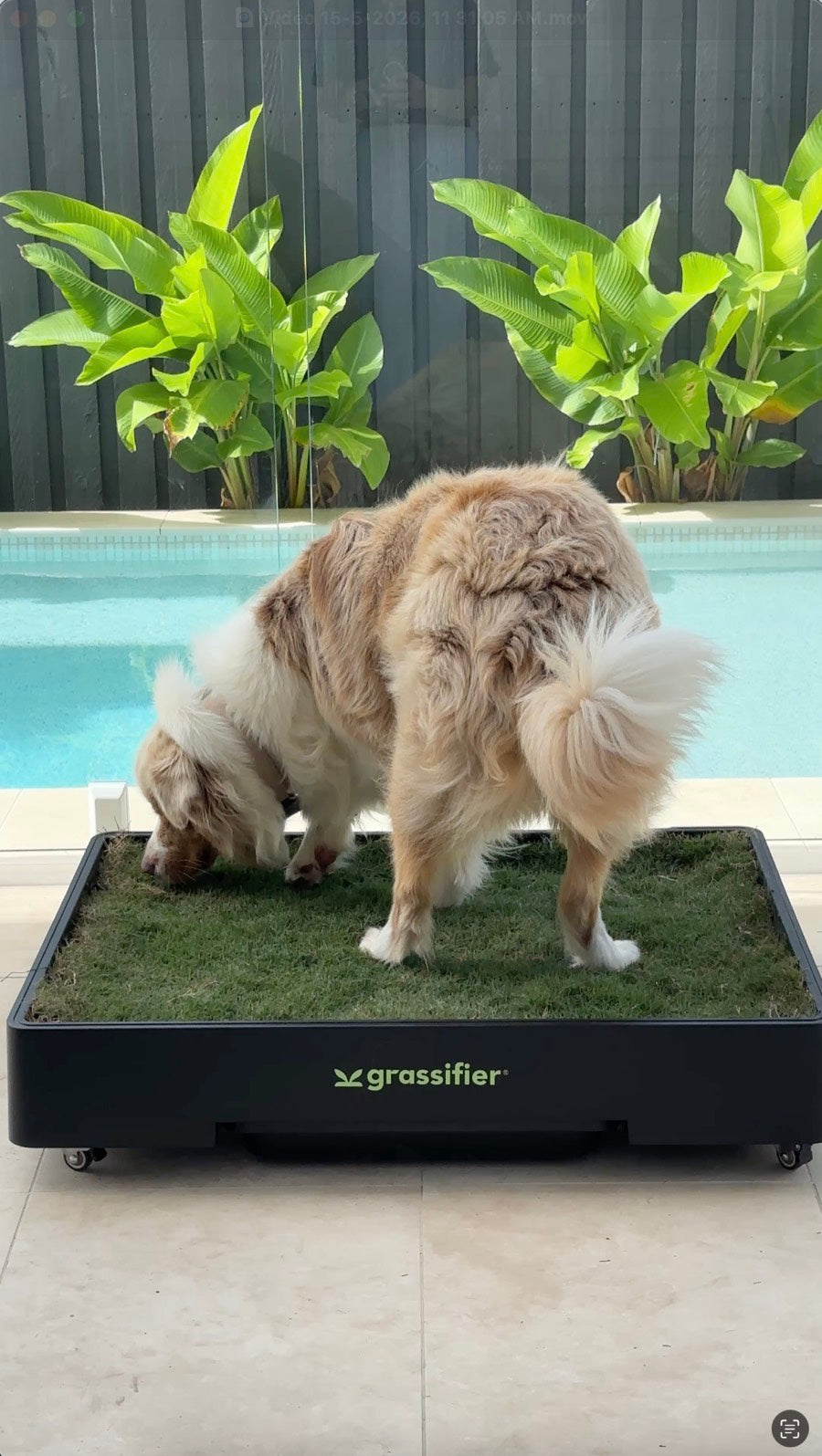 Start hereIntroducing your dog to itWhere to put it, what to say, and what to do when they are not interested.Read this
 Buying itChoosing and cutting turfWhat to look for at the nursery, how much you need, and how to cut it without wrecking the edge.Read this
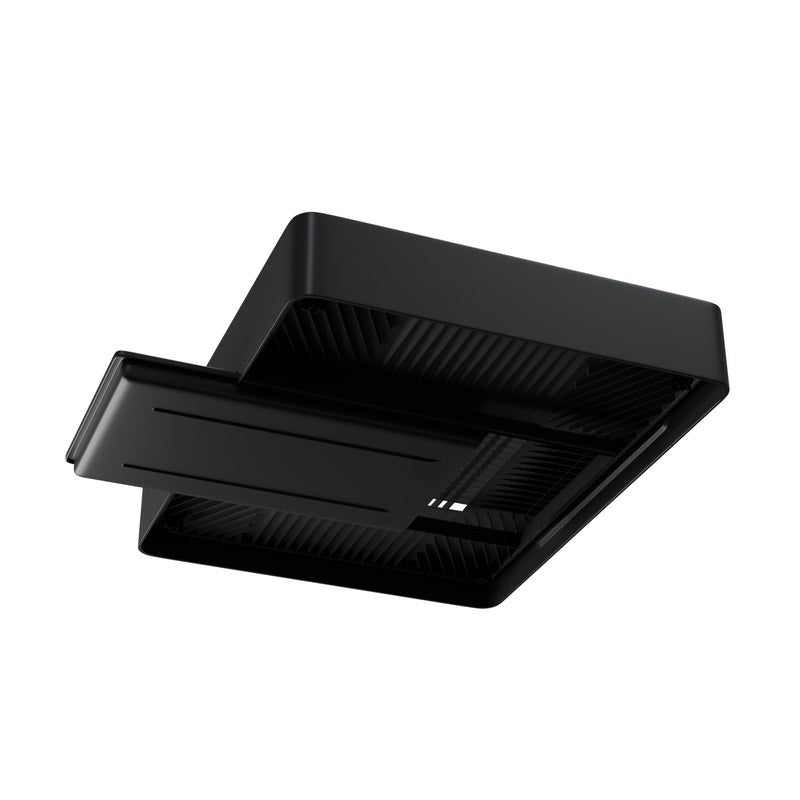 The honest answerDoes real grass smell?It does not, until something goes wrong. Here are the three things that go wrong.Read this
 ComparingReal grass vs fake grass and padsWhat each one is actually good at, including where real grass is the wrong answer.Read this
 When it goes backwardsTraining that has slippedWhy a trained dog starts having accidents, and how to get it back in a week or two.Read this
The one that matters most
Looking after your grass
Everything here comes down to one idea. Healthy grass works like a sponge. When the turf is alive and there is good soil underneath, it soaks up your dog's pee and breaks it down naturally. That is what stops the smell.
When the grass is drowned, dried out or dead, it cannot do that job any more. That is when the smell starts and the turf needs replacing sooner. So looking after it is really just keeping the grass alive.
Your simple routine
Every day or two. Pick up any solids, same as you would in the garden. Check the soil - if it feels dry, water it lightly. Moist, never soaked.
Every few days. Using the tray? Empty it, and do not wait for it to reach the top. Letting it free-drain onto a balcony or paving? Hose the area down.
Once a week. Wash the tray out with warm soapy water. An enzymatic cleaner now and then works well.
That is genuinely the whole job.
The five mistakes we see most
1. Watering it too much. This is the single most common reason turf dies early and starts to smell. It feels like looking after it, but roots sitting in water drown. Once it is waterlogged, pee runs straight through instead of being broken down - exactly the smell you were trying to avoid.
Aim for moist, not soggy. Damp sponge, not puddle. In the first couple of weeks a light sprinkle once a day is about right, then adjust. There is no single number that works everywhere - a sunny balcony in Perth needs something completely different to a shaded courtgarden in Hobart. If you would rather not guess, the moisture meter tells you whether the soil at the roots is too wet, too dry or right. Push it into the middle of the patch for the truest reading.
2. Not enough soil underneath. Soil is not optional. It keeps the roots alive, and living roots are what break the pee down. Skimp on it and the turf dies quickly.
Lay about 4-5 cm of potting mix across the bottom before the turf goes in - roughly one 25L bag. You do not need to replace it every time; it usually lasts through a few turf changes unless it has gone very wet or broken down.
3. Nowhere for the water to go. It needs to drain like a pot plant. If water cannot escape it pools around the roots and the drowning starts again. Make sure your liner is porous, or has holes punched in it for even drainage.
4. Forgetting the tray. A tray full of standing pee will smell no matter how healthy the grass is. Empty it at the fill line, or every couple of days, whichever comes first. Empty it into a bucket rather than carrying it. Wash it properly every so often.
5. Not enough light. Grass needs light. In a dark corner it grows slowly, stays weak and does not last. Give it the brightest spot you reasonably can, even indirect. If your space genuinely has no sun, ready-grown turf does better than seed - or use a grow light, they are cheap and they work.
How long should it actually last?
Two to three months is the realistic average. Poorly maintained setups can be done in two weeks. Well looked-after ones often reach six months, and some customers get a year or more.
The difference is almost always the five things above, plus how many dogs use it and how often. Some thinning or yellowing where your dog favours one spot is completely normal - not a sign you have done anything wrong.
What our longest-lasting customers do
They pick the right grass. Bermuda, Zoysia and St. Augustine are the standouts - durable, and they recover well from dog use. Fescue works in cooler states. Turf from Bunnings or a local nursery starts around $8 and does the job. Big tip: make sure it looks healthy when you buy it.
They run two and rotate. One in use, one resting. Swapping them gives the grass real time to recover, and it is the single biggest difference between a setup that lasts weeks and one that lasts many months.
They grow their own. Sow seed over bare soil and give it two to three weeks before your dog uses it. Grown well it lasts far longer than pre-cut turf. Avoid generic seed mixes - they do not stand up to dog use.
They repair instead of replacing. If only part has died, lift that section, top up the soil, sow seed over it and rest it a week or two. No need to redo the whole thing.
Something not right?
It smells. Nine times out of ten it is one of two things: the turf is too wet to break the pee down, or the tray needs emptying and cleaning. Check both before anything else. If the grass has already died it cannot absorb anything, and fresh turf is the fix.
It died much faster than expected. Usually too much water, not enough soil, or no drainage. Check how deep your soil is and whether water is actually getting out.
It is soggy and will not dry out. Water is not escaping fast enough - over-watering, or heavy rain. Cover it during downpours or move it undercover.
Still stuck? Email contact@realgrasspuppypotty.com.au and tell us how often you water it, where it sits, how much sun it gets and how deep your soil is. That is usually all we need. We have been helping people with this since we started on a balcony with a dog named Bonnie, and there is not much we have not seen.
If a piece still gives up early, tell us what happened and we will help you work out why. What we promise, and what we don't sets out where turf life sits.
Start here
Introducing your dog to it
Most dogs take to real grass quickly, because it is what they would choose outside anyway. Your job is mostly to show them where it is and then get out of the way.
Before they ever use it
Put it where they already go, or as close as you can get. If they have been going by the back door, the potty goes by the back door. Moving it later is easy; changing a habit they formed somewhere else is harder.
Leave it there a day before you expect anything. Let them sniff it, stand on it, ignore it. Grass that smells like the room it is in is less strange than grass that appeared five minutes ago.
The first few days
Take them to it at the obvious moments. First thing in the morning, after every meal, after a nap, after play, and last thing at night. Puppies usually need to go within about fifteen minutes of eating.
Use the same words every time. Pick a phrase - "go potty" is fine - and say it as they step on. You are building an association, so consistency matters more than the words.
Praise the second they finish, not later. A treat and a fuss within a couple of seconds teaches them what they just did was right. Thirty seconds later and they have no idea what you are pleased about.
Stay boring while they are on it. No games, no talking to them, no eye contact until they have been. A potty that is also a play area takes longer to click.
If they are not interested
Move a scent marker onto it. A soiled pad, or a paper towel with a little of their urine, placed on the grass. It tells them what the spot is for far faster than you can.
Shrink their world. Fewer rooms, more supervision, or a pen around the potty. Most accidents happen when a young dog wanders off and finds somewhere else first.
Check the grass itself. Dogs avoid turf that is soggy, dried out or dead. If it is not somewhere you would want to stand, they will feel the same.
Give it time. Some dogs use it the first day, some take a couple of weeks. Older dogs unlearning years of habit take the longest.
Accidents
Do not scold. It teaches them to hide where they go, not to use the potty - and you will find the results behind furniture instead.
Clean it with an enzymatic cleaner, not a normal one. Anything ammonia-based smells like a toilet to a dog and invites a repeat in the same place.
If accidents suddenly restart after weeks of getting it right, that is regression - usually a change in routine, a house move, or occasionally something medical worth a vet call.
Honestly, though
Most dogs take to it. Some never quite do, and that is usually a dog who had firmly decided where the toilet was long before the potty arrived. We would rather say that here than pretend otherwise - see our guarantees for exactly what we do and do not promise.
Buying it
Choosing and cutting turf
Any real turf sold as a slab works. Buffalo, couch, kikuyu, fescue - your dog does not care and neither does the Grassifier®. What matters far more than the variety is how fresh it is when you buy it.
What to look for
Green all the way to the edges. Yellowing at the edges of a slab means it has been sitting on the pallet a while. It will still work, it just starts its life with less left in it.
Damp soil, not dry. Lift a corner. The soil underneath should feel like a wrung-out sponge. Dry, crumbling soil means the roots have already started to go.
Firm, not falling apart. A good slab holds together when you pick it up. If it sheds soil everywhere it has been handled too much.
Ask when the delivery came in. Most nurseries get turf weekly and will happily tell you which day - buying the morning it arrives is the single easiest way to get an extra few weeks out of it.
How much you need
One Grassifier takes one piece. Piece sizes differ from state to state, so depending on where you are you will either drop it straight in or make one cut. Our turf guide lists what each supplier sells and exactly where to cut it.
Cutting it to fit
Cut it grass-side up on a hard surface, not on your lawn, and use our turf knife. The serrated blade is built for this and gets through the mat in one pass. Kitchen knives and box cutters drag at the runners instead of cutting them, which leaves a ragged edge that starts drying out the moment you lay it.
Press the blade down through the mat rather than sawing side to side. Turf is held together by runners, and sawing drags them out of the soil, which leaves a ragged edge that dries out fast.
If you are laying two pieces side by side, push the cut edges hard up against each other. A gap dries out from both sides and is the first bit to die.
Getting it in
Liner first, then the turf, soil side down. It should sit flat with no bulges - if a corner rides up, trim it rather than forcing it, because a lifted corner is a corner that dries out.
Water it in on the first day. It has been out of the ground and off a pallet, and it is thirsty.
The honest answer
Does real grass smell?
No - not while the grass is alive and the tray is being emptied. That is not marketing, it is just what soil does. But it is a fair question, and the honest answer has conditions attached, so here they are.
Why it does not smell
Urine is mostly water and urea. Living grass and the soil under it break urea down and use it - that is why dog urine burns a lawn in patches rather than sitting on top of it. A healthy piece of turf is doing the same job a garden does, in a smaller space.
The drainage system underneath is the other half of it. Liquid that is not absorbed drains away into the tray instead of pooling around the roots. Standing liquid is what turns anything sour.
When it does smell, it is one of three things
1. It has been overwatered. Far and away the most common cause. Waterlogged soil cannot absorb anything more, so urine sits on the surface and the roots start to rot. Damp, never soggy.
2. The tray has not been emptied. The tray is doing its job by collecting liquid. Left for a week, that liquid is exactly what you would expect it to be. Empty it every few days, and wash it with warm soapy water once a week.
3. The grass has died. Dead grass has stopped absorbing anything. If it has gone brown and crisp, it is not a cleaning problem, it is past its life and needs replacing.
Solids still need picking up
Same as a garden. The grass deals with liquid, not with everything. Pick up solids daily and the rest looks after itself.
Why pads and fake grass are different
A pee pad holds urine against a plastic backing with nothing to break it down, so it starts to smell within hours. Fake grass has the same problem with the added issue that urine works into the backing and stays there - which is why it needs scrubbing rather than rinsing.
Real grass is the only one of the three where something is actually consuming the waste rather than storing it.
Comparing
Real grass vs fake grass and pads
We are obviously not neutral here, so we have tried to be straight about what each option is actually good at, including where real grass is the wrong answer.
Pee pads
Good at: cheap to start, no setup, easy to travel with.
The problem: you buy them forever, and they teach a dog that soft absorbent things on the floor are toilets. A lot of the "my dog wees on the rug" calls we take are from people who trained on pads. They also start to smell within hours, because the urine is held against plastic with nothing to break it down.
Fake grass pads
Good at: nothing to replace, looks tidy.
The problem: plastic does not absorb, so everything sits on the surface or works into the backing. That means scrubbing, not rinsing - most people we speak to are washing it daily and still finding it smells by the end of the week. It also does not help with outdoor training, because it is nothing like what is outside.
Real grass
Good at: it is the same surface they will use outside, so the habit transfers. The grass and soil break waste down rather than storing it. And it costs about seven dollars a piece rather than a subscription.
The honest downsides: you have to go and buy turf, and it has a life of a couple of months rather than forever. It also needs light - though that does not have to be sunlight. A cheap grow light or a heat lamp keeps it going perfectly well in a flat that gets none, and plenty of our customers run one through winter.
What it costs over a year
The comparison table on our homepage has the real figures for all four options, including grass delivery subscriptions. The short version: subscriptions cost thousands a year, and buying your own turf costs about the price of a coffee every couple of months.
When it goes backwards
Training that has slipped
A dog that was trained and has started having accidents again has not forgotten. Something has changed. Regression is common, it is almost always explainable, and it is usually fixable in a week or two.
First, rule out the medical
If it came on suddenly in a dog that was reliable, see a vet before you change anything else. Urinary tract infections, bladder stones and several other conditions all present as sudden accidents, and no amount of training fixes a medical problem. This is worth doing first, not last.
Then ask what changed
Has the potty moved? Even across the room. Put it back where it was and move it later in small steps.
Is the grass past its life? Dogs avoid dead grass. If it has gone brown or is more than a couple of months old, replace it before you conclude anything about their training.
Has the tray been emptied? They will refuse a potty they consider dirty, which is reasonable of them.
Has anything else changed? A new baby, a new pet, a house move, a change in your working hours, building noise. Toileting is one of the first things to go when a dog is unsettled.
Go back to the beginning, briefly
Take them to it at the obvious moments again - after waking, after eating, after play, last thing at night. Praise the second they finish. Supervise or confine them when you cannot watch. It usually only takes a few days of doing it properly.
Clean accidents with an enzymatic cleaner
This matters more than people expect. Ordinary household cleaners remove what you can see but leave the scent markers a dog can smell, and a dog returns to where it smells like a toilet. An enzymatic cleaner breaks those down. Avoid anything ammonia-based - to a dog, ammonia smells like urine.
Do not punish it
Telling a dog off after the fact teaches them to hide where they go, not to stop going. It makes the problem harder to see and slower to solve.
Video
Changing your grass in 10 minutes
Turf lasts two to three months on average, then it is time for a fresh piece. Here is the whole change, start to finish, with a bag and a bin doing most of the work.
Step by step
- Take a Turf Bag and some gloves when you pick up your turf, so the dirt stays off your hands and out of the car.
- Gently fold the turf and slide it into the bag.
- At home, take it out and rest it on your replacement liner, or a sheet of cardboard.
- Put the empty Turf Bag, or a small bin (one with wheels is even better), right next to your Grassifier®.
- Cut the old turf into smaller pieces with a Turf Knife and lift them straight into the bag or bin.
- Replacing the soil too? Lift the old liner out by its corners, like a bin bag, and drop it straight in.
- Lay your new liner and add the potting mix.
- Trim the new turf with your Turf Knife if it needs it, then settle it into the soil.
- Give it a good watering to help it settle into the potting mix.
- Get your furry little one to do the quality check.
Need turf? The turf guide lists suppliers in your state, the piece sizes they sell and how to cut them to fit.
Question we have not answered?
Email contact@realgrasspuppypotty.com.au. A person answers, and promptly - not days later.